Home · Services · Emergency Roof Tarping
Emergency Roof Tarping in Pearland, TX
Quick answer
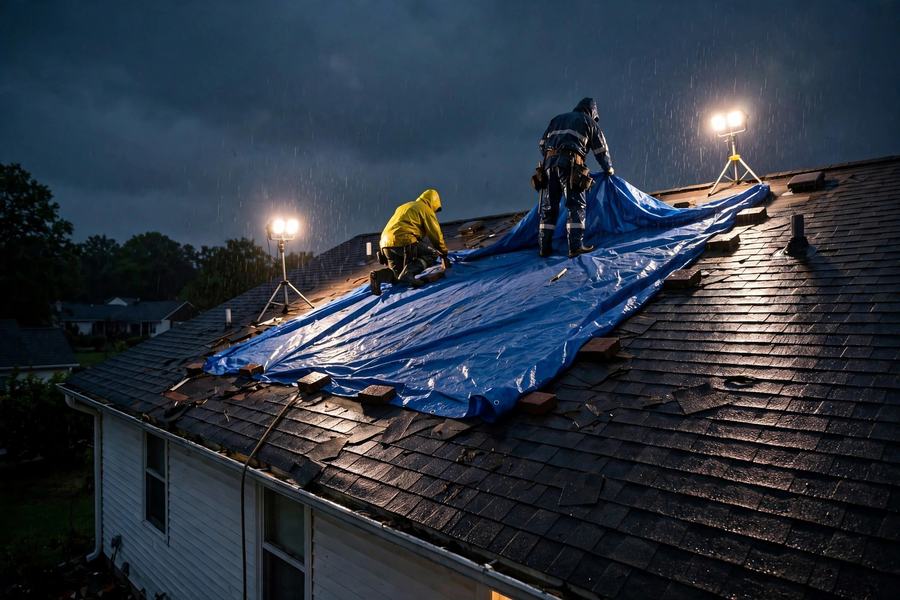
Securing a storm opened roof with a properly anchored tarp the same day, so rain stops entering while the repair or the claim is arranged.
Tarping in Pearland is hurricane-season triage: a stripped slope or a limb through the deck gets covered, photographed, and documented for the claim before any repair conversation, with the tarp anchored to survive the weather still coming rather than the weather that just left. The sequence is protect, document, then scope. A tarp installed without the dated photographs has protected the house and abandoned the claim, and in a city where creek flooding can close streets for days, the documentation run happens while access still exists.
Signs you need emergency roof tarping
- A ceiling stain that grows after rain
- Shingles or tiles on the ground after wind
- Granules collecting in gutters and at downspouts
- Daylight or damp decking visible in the attic
- A patio or flat section that holds water for days
What the job involves
What affects the price
- The failed detail: flashing, valley, vent, or field material
- Layer count and the condition of what lies beneath
- Slope, access, and story height
- Whether a section or the full roof is the honest scope
- Permit requirements for replacement work
When it is an emergency
An open roof is an emergency in any forecast: one storm through a lifted section can wet ceilings, insulation, and wiring. Tarping is temporary protection, not a repair, and it should be priced as its own visit.
PLACEHOLDEREmergency Roof Tarping across the Pearland area
Related services
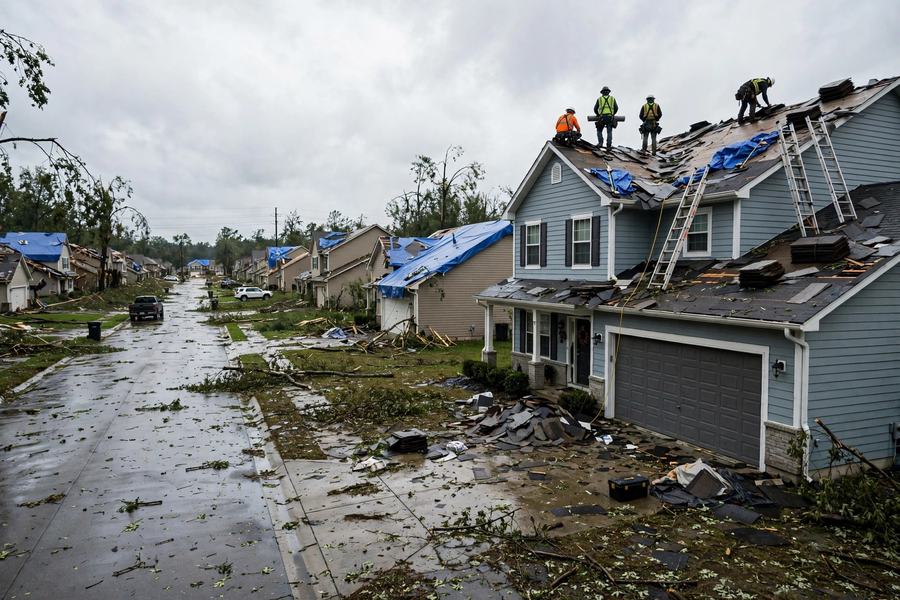
Storm & Hail Damage Roof Repair
Assessment and repair of wind and hail damage after a storm date: lifted and missing shingles, bruised mats, dented metal, and the leaks that follow.
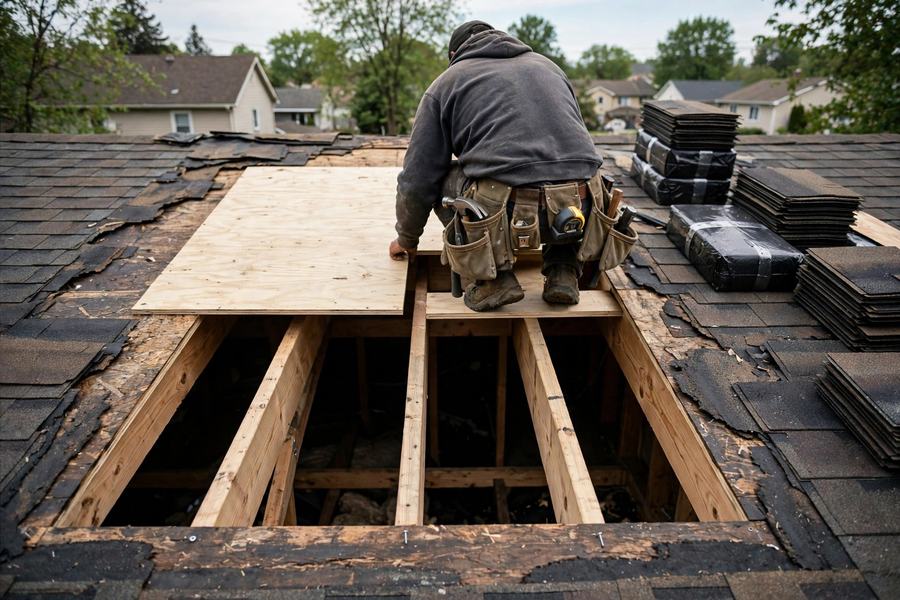
Roof Repair
Diagnosis and repair of a roof that leaks, has lost shingles, or shows storm wear, scoped to the actual failure instead of a full replacement sales pitch.

Roof Inspection & Assessment
A documented roof inspection with photos: condition by slope, remaining life estimate, storm damage findings, and a repair list in priority order.
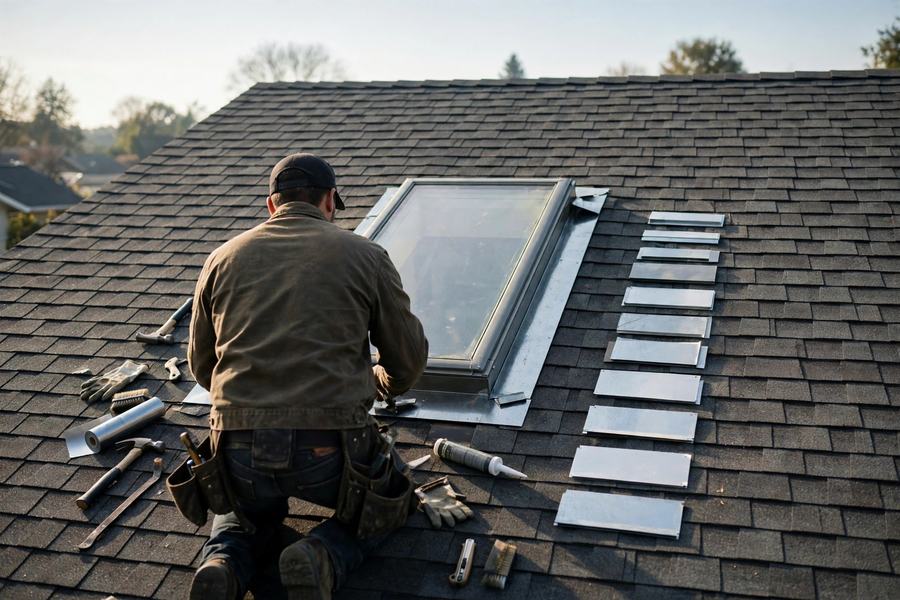
Roof Leak Repair
Finding and fixing the actual entry point of a roof leak, which is usually flashing, a vent, or a valley rather than the shingle field under the stain.
Emergency Roof Tarping questions, answered
When is emergency roof tarping an emergency?
An open roof is an emergency in any forecast: one storm through a lifted section can wet ceilings, insulation, and wiring. Tarping is temporary protection, not a repair, and it should be priced as its own visit.
What affects the price of emergency roof tarping in Pearland?
The main price factors for emergency roof tarping are covered in the cost section above. The contractor confirms the exact price in a written estimate after seeing the job, and nothing is owed until you approve it. The call and the referral are free.
Does living near Mary's Creek or Clear Creek change my roof decisions?
It changes the wind and water context, not the shingle catalogue. The creek corridors funnel storm wind, so the slopes facing them take lift and driven rain first, and during Harvey those corridors were where the city's water rose, which is why creek-side roofs carry the footprint's most careful storm documentation habit. Practically: flashing and valley details on corridor-facing slopes get inspected after every named storm, attic checks follow the same calendar, and the claim file is built by storm date without exception. The roof itself is specified for the Gulf corridor generally; the documentation is specified for the creek.
How much does roof repair cost in Pearland?
Published national guides put minor roof repairs commonly between $150 and $450, leak repairs between $350 and $1,200 depending on the entry point, and emergency tarping between $200 and $1,000. Full asphalt shingle replacement runs roughly $3.50 to $6.00 per square foot installed, which lands a typical home between $5,000 and $15,000, and metal roofing runs roughly $9 to $16 per square foot installed. Anyone quoting a firm total without getting on the roof is guessing; the honest sequence is inspection, then a written price for the named failure.
Does homeowners insurance cover roof damage in Pearland?
It depends on the cause, and the cause is the whole answer. Sudden storm damage, wind that lifts or removes shingles, hail that fractures mats, and a tree through the roof are the covered kind, subject to your deductible and to whether your policy pays replacement cost (RCV) or depreciated actual cash value (ACV). Age, wear, granule loss over time, and leaks from a roof at end of life are maintenance and are not covered anywhere. Document storm damage with dated photos before tarping or repair, and file under the storm date.
Request a callback
Prefer to talk later? Leave your details and an independent local pro will call you back. No charge to you, no obligation.
Marys Creek Roofing Co is a free referral service. Submitting this form connects you with independent local contractors who provide the work.